


Slope
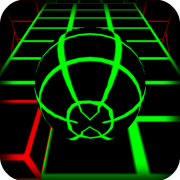
Slope is a fast-paced 3D endless runner where you steer a rolling ball down a neon track, dodging red blocks, gaps, and narrow passages while the speed keeps climbing. The controls are simple — left and right, or A/D — but the ball carries momentum, so every tap has to be countered or you’ll drift straight off the edge. Runs end instantly, scores rise with distance, and the real skill is reading the track ahead instead of reacting at the last second.
You can play Slope right in your browser online, with no download or account needed, and jump straight into the “one more run” loop.
Slope Is a Momentum Game, Not a Reflex Test
Most people who quit Slope blame their hands. They see a fast-moving ball, a red block, a gap — and their fingers don’t answer quickly enough. So they decide the game is testing raw reaction speed and move on.
That’s the wrong read. Slope rewards reading the track, not twitching at the last second. Once you understand what the ball is actually doing underneath you, the game changes shape completely.
What Slope’s Controls Are Really Doing
You have two keys: left and right, or A/D. That’s the whole control scheme. No brake, no jump, no boost. The ball accelerates forward on its own, and your only job is to keep it on the track.
Here’s the part Slope never spells out: your steering input controls sideways velocity, not sideways position. Tapping left doesn’t move the ball one lane over and stop. It gives the ball leftward momentum that keeps carrying it until you actively counter-steer to cancel the drift.
This one mechanic explains almost every death in Slope. New players treat the track like a grid — tap left, tap right, nudge between lanes. The ball doesn’t work that way. It behaves more like a marble on a tilting table. Every input has to be paired with an opposite input, or the ball keeps sliding in the direction you sent it. Players who break 100 points aren’t reacting faster. They’re steering in pairs.
Why Slope’s Speed Curve Is a Reading Test
Slope’s difficulty ramps on a steady acceleration with no plateau. The first 10–15 seconds are forgiving — almost any input survives. From about 15 to 40 seconds, the speed reaches the level where casual runs end: fast enough that lazy steering drifts you off, slow enough that a careful player can still manage.
Past 40 seconds, something shifts. The track is moving quickly enough that you can no longer react to obstacles as they appear. The ball reaches “in front of you” before your fingers can answer. Survival from that point depends entirely on looking at the far end of the track and planning the line you’ll need two seconds from now.
This is why “just play more” stops working after a certain point. The skill that carries you past 40 seconds is not the skill that got you there. It’s the transition from watching the ball to watching the horizon — and most players never make it because nobody tells them it’s a transition at all.
Four Slope Deaths You Can Stop Repeating
Almost every Slope run ends in one of a handful of patterns. Naming them makes them catchable.
The over-steer slide-off. You tapped left to dodge a block, never cancelled the drift, and slid off the left edge three seconds later. The fix is counter-tapping after every dodge — treat steering as a paired input, not a one-way command.
The airborne wander. You kept steering through a jump, landed already drifting, and slid out. Once the ball leaves the track, your steering does almost nothing until it lands. Set your line before the ledge, then keep your hands still through the airtime.
The tunnel-exit throw. Leaving a tunnel is one of the few moments where any input actively hurts. The track inside is narrow and flat; the track outside is wide and cambered. The ball needs a half-second to settle onto the new surface. Steering during that half-second throws it sideways. Hands off, wait for grip, then line up.
The speed-wall panic. You hit a velocity where the track outpaced your reading, and you slammed a key in response. Small taps preserve the gentle drift you can still control. Big inputs at speed are how you launch off the side. Make the smallest correction that does the job, not the fastest one.
Slope vs. Tunnel Rush: Different Brains, Different Tracks
Slope gets grouped with Tunnel Rush constantly, and the two do share a skeleton: one control axis, fixed forward speed, instant death, instant restart. But they’re testing different brains.
Slope is played on a plane. Obstacles slide across a level track or leave holes in it. Your job is lane choice, and the difficulty is pure speed. The visual field stays steady, so the challenge is sustained control and read-ahead under acceleration.
Tunnel Rush puts you inside a rotating tube. The obstacles are fixed to the wall while the tube spins, so the safe gap moves around you. It’s slower than Slope at equivalent distance, but it adds spatial disorientation. Players who are comfortable in Slope often watch their first Tunnel Rush runs end early because the world turned while they were deciding.
If you want to train raw reaction and momentum management, play Slope. If you want to train spatial reading under motion, play Tunnel Rush. Alternating between them makes both feel fresh again, because each one exposes the habits the other lets you coast on.
Play Slope on flappybirdpro.com
Slope runs entirely in the browser — no download, no account, no install. It loads on Chromebooks, mid-range phones, and laptops with integrated graphics, and restarts are instant enough that the “one more run” loop never gets a loading screen in the way.
The base Slope layout is the cleanest place to learn the momentum model: the speed ramp is gentle enough to internalize the steering pairs before the track starts demanding read-ahead. Tighter Slope layouts push the same skill sooner, so they’re a good next step once you’re clearing 40 seconds consistently.
Head to flappybirdpro.com and give it a run. Not to beat a high score on the first try — just to test whether the ball is doing what you think it’s doing. Once you feel the drift, Slope stops being a test of your hands and starts being a test of your eyes.